
Wind Mitigation for Roofs: How to Protect Your Home from Wind Damage
How to prevent roof wind damage
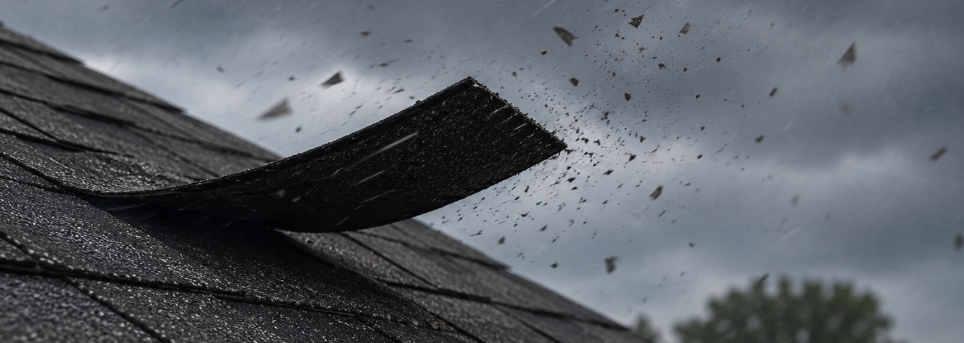
High winds are one of the most common causes of roof damage across the U.S. Whether it’s a thunderstorm, hurricane, derecho, or just a strong seasonal front, your roof is what takes the hit first.
The good news is a lot of wind damage isn’t random. It usually comes down to how the roof was built—and how well it’s been maintained over time.
If you’ve heard the term wind mitigation, here’s what it actually means, and how keeping up with your asphalt shingles can help your roof hold up better when storms roll in.
What Is Wind Mitigation?
Wind mitigation is just a way of describing how a roof is built and maintained to better handle high winds.
Insurance companies often look at wind mitigation features when they inspect a home. In some states, having the right features can even lower your insurance premium.
At its core, wind mitigation is about reducing the chances of shingles lifting, water getting in, or parts of the roof system failing during a storm.
What Inspectors Look At
A wind mitigation inspection usually focuses on a few key areas:
Roof Age
Newer roofs are generally built to more current building codes, which tend to include stronger wind resistance standards.
Roofing Material
Inspectors look at what type of roof you have—whether it’s asphalt shingles, metal, tile, or something else—and its overall condition.
Roof Deck Attachment
This is how the roof sheathing is fastened to the structure underneath. Stronger fastening patterns help the roof resist uplift in high winds.
Roof-to-Wall Connections
This is one of the most important parts of the system. Metal clips, straps, or other reinforcements help tie the roof into the walls of the home.
Older homes without these upgrades are usually more vulnerable in strong wind events.
Roof Shape
Hip roofs tend to perform better in high winds because they don’t have large flat sides for wind to push against the way gable roofs do.
Secondary Water Protection
Some roofs include an extra waterproof layer under the shingles. This helps reduce leaks if shingles are damaged or blown off.
A Common Weak Point: Loose Shingle Tabs
A lot of homeowners assume shingles blow off because the wind was just “too strong.”
But in most cases, the shingles that fail were already starting to let go.
As asphalt shingles age, the factory seal that bonds each shingle to the next can weaken over time. That seal is what keeps the tabs from lifting.
Heat, UV exposure, oxidation, and general weathering all slowly break it down.
Once that happens, wind doesn’t need to be extreme. It just needs to get under the edge of a loose tab and start lifting it. After that, it’s only a matter of time before it tears away.
That’s why missing shingles after a storm are often not random—they’re usually the ones that were already loose.
How Fresh Roof Fits Into the Picture
Fresh Roof isn’t a structural wind mitigation system, and it doesn’t replace proper roofing installation or hurricane hardware.
What it does do is help with the condition of aging asphalt shingles before they reach the point of failure.
Every Fresh Roof project starts with a roof inspection.
In many cases, certified dealers can also perform a wind test to check for shingles that have lost their seal.
If loose tabs are found, they can be repaired or resealed before any treatment is applied. That step matters, because it addresses existing issues instead of just covering them up.
GreenSoy™ Technology
Fresh Roof uses a proprietary treatment called GreenSoy™ Technology, designed specifically for asphalt shingles.
It’s applied to help support aging shingles by:
- Helping restore flexibility
- Slowing down oxidation
- Supporting granule retention
- Helping maintain overall shingle performance
As shingles dry out over time, they become more brittle. Flexible shingles generally handle expansion, contraction, and wind movement better than stiff, aged ones.
Will This Lower My Insurance?
Wind mitigation discounts are usually tied to structural features like:
- Roof-to-wall connections
- Roof deck fastening
- Building code compliance
- Roof shape
- Secondary water resistance
Fresh Roof itself typically doesn’t qualify as a discount factor.
That said, keeping your roof in good condition and addressing loose shingles can still help reduce the risk of wind-related damage over time.
Your insurance provider is always the best source for what applies in your area.
Why Maintenance Actually Matters
Most roof problems don’t start with a big failure. They start small.
A loose tab here. Some granule loss there. A little curling at the edges.
Homeowners usually don’t notice anything until shingles start blowing off or a leak shows up.
By that point, the damage is already underway.
Regular inspections and basic maintenance can catch those issues early—before they turn into something more expensive.
The Bottom Line
Wind mitigation starts with how a roof is built, but it doesn’t end there.
Even a well-built roof can struggle if the shingles are aging and the seals are starting to fail.
That’s why inspections, small repairs, and ongoing maintenance matter just as much as construction quality.
Fresh Roof fits into that maintenance side of the equation by helping restore flexibility to aging asphalt shingles and making sure loose tabs are addressed before treatment.
If your roof is getting up there in age, it’s worth having it looked at before the next big storm—not after it.




Best Roof Rejuvenation in California: Why Smart Homeowners Are Choosing Restoration Over Replacement