Is Your Roof Just Dirty or Actually Dying? The Truth About Moss, Algae, and Shingle Health
The Culprit: It’s Not Dirt, It’s Gloeocapsa Magma
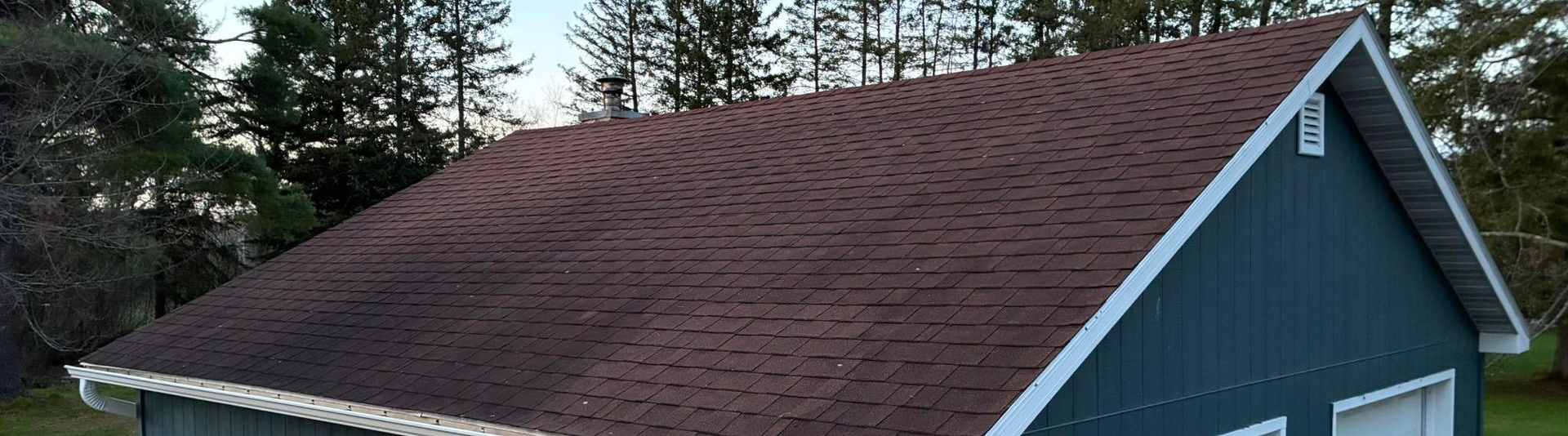
If you look up at your roof and see dark streaks, green fuzzy patches, or spots that look like dirt, your first instinct might be to call a pressure washing company. After all, it’s just an eyesore, right?
Not exactly.
What looks like "dirt" is often a living organism that is actively eating your roof. In the roofing industry, we see homeowners mistake structural decay for a simple cleaning issue every day. Understanding the difference between a "dirty" roof and a "dying" roof is the difference between a minor maintenance treatment and a $20,000 replacement.
The Culprit: It’s Not Dirt, It’s Gloeocapsa Magma
Those black streaks on your shingles aren't soot or dust. It’s a type of blue-green algae called Gloeocapsa Magma.
Why is it there? Modern asphalt shingles are manufactured with limestone as a filler to add weight. To these algae, your roof is an all-you-can-eat buffet. As the algae consume the limestone, the shingles lose their structural integrity, become brittle, and eventually begin to shed their protective granules.
The Danger of Moss and Lichen
While algae eat the filler, moss and lichen do physical, mechanical damage:
- Root Penetration: Moss has "roots" (rhizoids) that wrap around the granules and dig into the shingle mat.
- Moisture Traps: Moss acts like a sponge, keeping your roof constantly damp. This leads to wood rot in the decking beneath your shingles.
- Shingle Lifting: As moss grows, it lifts the edges of your shingles, making them prone to blowing off in high winds.
When Cleaning Isn’t Enough
Many homeowners think a "Roof Wash" is the cure. While a soft wash will kill the algae and improve curb appeal, it doesn't solve the underlying problem: Oil Loss.
By the time a roof has significant algae growth, it is usually old enough that the natural petroleum oils in the asphalt have begun to dry out. A clean roof that is "brittle" is still a dying roof. In fact, the cleaning process itself—even "soft washing"—can be stressful for an aging, dried-out shingle.
The Solution: Clean, Then Rejuvenate
This is where Fresh Roof changes the game. We don't just want your roof to look new; we want it to perform like new.
- The Kill: First, the biological growth (algae and moss) must be professionally treated and removed.
- The Rejuvenation: Once the roof is clean, we apply our bio-based GreenSoy™ Technology. This penetrates deep into the shingles to replace the lost oils.
- The Result: The shingles regain their flexibility, the granules are "locked" back into place, and the roof becomes a protected environment.
The Fresh Roof Advantage: Why "Standard" Rejuvenation Isn’t Enough
If you’ve been shopping around, you might think all roof sprays are created equal. Many products on the market are basic "re-oilers"—they put moisture back into the shingle, but they stop there.
Fresh Roof is different. Our proprietary Advantage Formula doesn't just nourish the shingle; it creates a hostile environment for the biological pests that killed your roof's health in the first place. Here is why our formula outperforms the "basic" sprays:
- The "Sealed-In" Shield: Unlike standard sprays that remain oily on the surface, our formula penetrates and then creates a breathable barrier. This makes it significantly harder for moss and lichen spores to "anchor" their root systems into your shingles.
- Active Prevention: While basic rejuvenators might actually attract dust and organic matter that moss feeds on, the Fresh Roof Advantage Formula contains specific agents designed to inhibit the regrowth of algae and green moss for years.
- Water Shedding Technology: Moss thrives on standing moisture. Our formula restores the shingle’s ability to "bead" water. Instead of soaking into the shingle mat where moss can drink it, rain slides right off into your gutters where it belongs.
Checklist: Signs Your Roof is "Dying" (Not Just Dirty)
- Granules in the Gutters: If you see piles of sand-like grit in your downspouts, your shingles are losing their protective layer.
- Curling Edges: Shingles that are "cupping" or curling are brittle and thirsty for oil.
- The "Crunch" Test: If you walk on the roof and it feels crunchy or stiff rather than pliable, the asphalt is failing.
- Stubborn Staining: If black streaks return quickly after cleaning, your shingles are too porous and need the Advantage Formula seal.
Don’t Just Wash It. Save It.
A clean roof is a great start, but a rejuvenated roof is a long-term investment. If you’re seeing black streaks or moss, don't wait for a leak to tell you the roof is failing.
Click here to get a free Fresh Roof assessment and find out if your roof is a candidate for rejuvenation. We can add up to 6 years of life per treatment for a fraction of the cost of replacement.


Best Roof Rejuvenation in California: Why Smart Homeowners Are Choosing Restoration Over Replacement