
Roof Rejuvenation Before and After: What Changes and What Doesn't?
See What Really Changes Before and After Asphalt Shingle Roof Rejuvenation
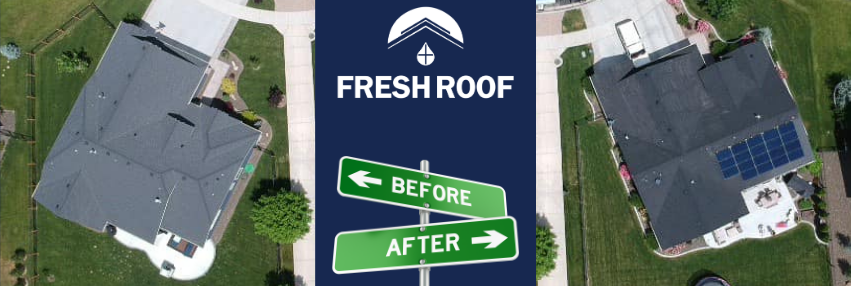
When homeowners search for roof rejuvenation before and after photos, they're usually looking for one thing:
Does roof rejuvenation actually work?
Before-and-after photos can certainly show a visible difference. An aging asphalt shingle roof may look darker and more uniform after a Fresh Roof® treatment.
But appearance isn't the whole story.
The real purpose of roof rejuvenation isn't to make an old roof look new.
It's to help maintain a qualifying asphalt shingle roof by addressing aging within the asphalt binder itself.
So what actually changes after roof rejuvenation? What doesn't change? And what should homeowners realistically expect?
Let's break it down.
What Happens to Asphalt Shingles as They Age?
To understand roof rejuvenation, you first need to understand why asphalt shingles age.
Your roof spends every day exposed to the elements:
- UV radiation
- Heat
- Oxygen
- Rain
- Wind
- Snow and ice
- Temperature changes
Over time, oxidation and weathering change the asphalt binder within the shingles.
As the asphalt ages, it can become harder, stiffer, and more brittle.
Eventually, homeowners may begin noticing visible signs such as increased granule loss, cracking, curling, fading, or shingles that simply don't have the flexibility they once had.
But there's an important point:
The aging you see on the surface is only part of what's happening.
Changes are also taking place inside the asphalt binder.
That's where roof rejuvenation comes in.
What Does Fresh Roof Rejuvenation Actually Do?
Fresh Roof is an asphalt shingle rejuvenation treatment designed to help maintain qualifying roofs before they reach the point of failure.
Fresh Roof uses GreenSoy™ Technology designed to penetrate the shingle and work within the aging asphalt binder.
Instead of simply coating the surface to make shingles look better, Fresh Roof is designed to help rebuild and protect the asphalt binder and improve important properties associated with aging shingles.
Fresh Roof also incorporates Granule Lock Technology to help reduce granule loss.
So when looking at a Fresh Roof before-and-after, there are really two types of changes to consider:
The changes you can see—and the changes you can't.
BEFORE: What Does an Aging Roof Look Like?
Every roof ages differently, but a qualifying roof may show some signs of normal weathering.
These can include:
- A dry or weathered appearance
- Some granule loss
- Reduced flexibility
- Fading or inconsistent color
- Early signs of brittleness
- Minor shingle aging
These signs don't automatically mean the roof needs to be replaced.
That's one reason having the roof professionally inspected is so important.
The question shouldn't simply be:
"How old is my roof?"
A better question is:
"What condition is my roof actually in?"
AFTER: What Can Change After Fresh Roof Treatment?
1. The Roof May Look Darker and More Uniform
This is usually the most obvious change in before-and-after photos.
Fresh Roof treatment can improve the appearance of weathered asphalt shingles, often creating a darker, richer, more uniform look.
That's a great benefit—but it shouldn't be confused with the primary purpose of rejuvenation.
Fresh Roof isn't simply a roof-coloring product.
The visible difference is only part of the treatment.
2. The Asphalt Binder Is the Bigger Story
The most important change isn't necessarily something you can photograph.
As shingles age, oxidation contributes to changes within the asphalt binder that can make the material increasingly stiff and brittle.
Fresh Roof's GreenSoy™ Technology is designed to work within that aging asphalt.
The goal is to rebuild and protect the asphalt binder, improving flexibility-related properties and helping address the effects of aging.
That's why judging roof rejuvenation solely by a before-and-after photograph misses much of the story.
A roof can look better after treatment.
But what's happening inside the shingle matters even more.
3. Shingle Flexibility Can Improve
Flexibility matters because a roof is constantly moving.
Shingles experience expansion and contraction as temperatures change. They're also subjected to wind, rain, snow, hail, and other environmental stresses.
As asphalt ages and becomes brittle, shingles can lose some of their ability to flex.
Independent laboratory testing of Fresh Roof-treated aged shingles showed significant changes in flexibility-related properties compared with untreated aged shingles. See results here
This is one of the reasons Fresh Roof focuses on the condition of the asphalt—not simply how the roof looks.
4. Granule Retention Can Improve
Those small granules covering asphalt shingles aren't there just for appearance.
They form an important protective surface on the shingle.
As the asphalt binder ages, granules can become easier to dislodge.
Fresh Roof's Granule Lock Technology is designed to help improve granule retention.
Independent testing has shown improved granule retention in Fresh Roof-treated shingles compared with untreated samples. See results here
That's another important result that isn't always obvious in a traditional before-and-after photograph.
What DOESN'T Change After Roof Rejuvenation?
This may be one of the most important parts of understanding roof rejuvenation.
Fresh Roof isn't magic.
And rejuvenation isn't a substitute for necessary roof repairs or replacement.
A Failed Roof Doesn't Become a New Roof
If a roof has serious structural problems, extensive leaks, severely damaged shingles, bad decking, or other conditions that make it unsuitable for treatment, spraying it with a rejuvenation product isn't going to solve those problems.
Fresh Roof is maintenance for qualifying asphalt shingles—not a way to hide a failed roof.
Broken Shingles Don't Repair Themselves
If shingles need to be repaired or replaced, those repairs should be addressed as part of preparing the roof for treatment.
That's why inspection comes first.
The goal is to make necessary repairs before applying Fresh Roof.
The Roof Doesn't Become Brand New
Roof rejuvenation doesn't turn a 10-, 12-, or 15-year-old roof back into a brand-new roof.
That's not the goal.
The goal is to help maintain and protect the roof you already have.
There's a major difference between claiming to make an old roof new and helping slow the aging process of a roof that still has useful service life remaining.
Fresh Roof is focused on the latter.
Why Before-and-After Photos Don't Tell the Whole Story
A dramatic before-and-after picture is great for social media.
But if you're evaluating a roof rejuvenation product, you should look deeper.
Ask:
- What is the product actually doing to the asphalt?
- Has it been independently tested?
- Does it improve measurable properties of aged shingles?
- Does it address granule retention?
- Is the roof inspected before treatment?
- Are necessary repairs completed first?
- Does the treatment come with a warranty?
Those questions tell you much more than simply looking at whether the roof became darker after it was sprayed.
What Should a Fresh Roof Before-and-After Really Show?
A proper Fresh Roof transformation should be thought of in three stages.
BEFORE
The roof is inspected to determine its overall condition and whether it qualifies for rejuvenation.
DURING
Necessary repairs are addressed, optional cleaning may be completed when appropriate, and Fresh Roof treatment is professionally applied.
AFTER
The roof has received preventative maintenance designed to help rebuild and protect the aging asphalt binder, improve flexibility-related properties, and help reduce granule loss.
The roof may look better.
But the bigger goal is:
Better Roof Longevity.
Is Roof Rejuvenation Better Than Roof Replacement?
They're not necessarily competing solutions.
They solve different problems.
A roof that has failed may need replacement.
A roof that's still in serviceable condition may benefit from maintenance.
That's why Fresh Roof doesn't believe every aging roof should simply be sprayed.
The roof needs to qualify first. Check your roof here
If repairs or replacement are the appropriate solution, those issues need to be addressed.
But if the roof is still a good candidate for preventative maintenance, rejuvenation may provide homeowners with another option before replacement becomes necessary.
When Is the Best Time to Rejuvenate a Roof?
One of the biggest mistakes homeowners can make is waiting until their roof is severely deteriorated before thinking about maintenance.
Roof rejuvenation makes more sense before the roof fails.
Think about changing the oil in your vehicle.
You don't wait until the engine stops working and then change the oil.
You maintain it along the way because you're trying to protect the investment and extend its useful life.
The same maintenance mindset can be applied to your asphalt shingle roof.
Don't wait until there's nothing left to maintain.
The Real Fresh Roof Before-and-After
The best Fresh Roof before-and-after isn't simply:
Old-looking roof → Better-looking roof.
It's a bigger story:
Aging roof → Inspected roof → Necessary repairs → Rejuvenation treatment → Maintained and protected roof.
That's what roof rejuvenation should be about.
Not covering up problems.
Not pretending an old roof is brand new.
Not spraying a failed roof and hoping for the best.
It's about taking a qualifying asphalt shingle roof and proactively maintaining it before replacement becomes the only option.
Is Your Roof a Candidate for Fresh Roof?
Every roof is different.
Age alone doesn't determine whether a roof needs replacement, and appearance alone doesn't determine whether a roof qualifies for rejuvenation.
A Fresh Roof certified dealer can inspect your roof, identify potential problems, determine whether repairs are needed, and help determine whether Fresh Roof rejuvenation is appropriate.
Your roof is one of the biggest investments protecting your home.
Protect what you already paid for.
Rebuild. Protect. Extend.
Better Roof Longevity, Guaranteed.™
Find a local certified Fresh Roof dealer to learn whether your asphalt shingle roof is a candidate for Fresh Roof rejuvenation. Find them here




Best Roof Rejuvenation in California: Why Smart Homeowners Are Choosing Restoration Over Replacement