
Why 30-Year Shingles Fail in 15 Years
The Truth About Roof Lifespan, Oxidation & Warranty Gaps
If you were told your roof had a “30-year shingle warranty” but it’s failing at year 12 or 16 — you’re not alone.
Across the country, homeowners are discovering a frustrating reality:
Many 30-year asphalt shingles do not actually last 30 years.
So what’s happening?
Let’s break down the real reasons shingles fail early — and what homeowners can do about it.
What Does “30-Year Shingle” Really Mean?
The term “30-year shingle” refers to a limited manufacturer warranty, not a guaranteed lifespan.
Important details many homeowners miss:
- Warranties are often prorated
- Coverage decreases significantly over time
- Labor is usually not covered
- Payouts are based on material value, not replacement cost
- Maintenance requirements may apply
This creates one of the biggest roof warranty problems homeowners face — believing coverage equals performance.
Why Do Shingles Fail Early?
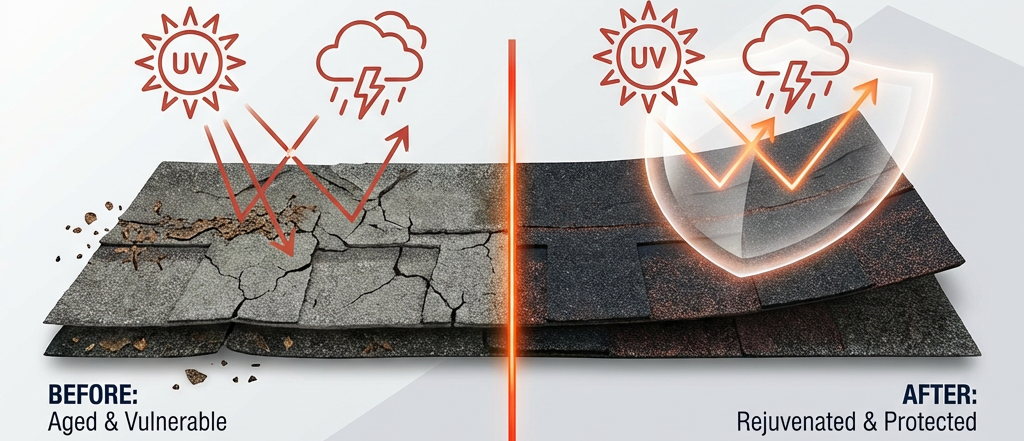
The number one reason: oxidation and oil loss.
Asphalt shingles contain oils that keep the asphalt binder flexible. Over time, exposure to:
- UV radiation
- Heat cycles
- Wind
- Moisture
- Freeze/thaw conditions
Causes those oils to evaporate.
When shingles dry out, they become:
- Brittle
- Prone to cracking
- More susceptible to granule loss
- Less impact resistant
This process can begin much earlier than 30 years — especially in hot or storm-prone climates.
The 30-Year Shingle Lifespan Myth
Modern asphalt shingles are engineered for durability — but they are still petroleum-based products exposed to harsh environmental stress every day.
In many climates, realistic expectations are:
- 15–20 years before noticeable aging
- Granule loss starting around 10–15 years
- Flexibility decline beginning as early as year 8–12
Without maintenance, oxidation accelerates.
That’s why many homeowners see failure long before the “30-year” mark.
Granule Loss: The Hidden Warning Sign
Granules serve critical functions:
- Protect asphalt from UV damage
- Provide fire resistance support
- Shield the shingle surface
- Add durability against weather
When shingles lose granules, the underlying asphalt becomes exposed — accelerating aging.
If you’re seeing granules in your gutters, that’s not cosmetic. It’s performance decline.
The Warranty Reality Check
One of the biggest roof warranty problems homeowners face is misunderstanding prorated coverage.
Example:
A 30-year shingle failing at year 15 may result in:
- A small material credit
- No labor coverage
- No tear-off coverage
- No disposal coverage
Meanwhile, a new roof could cost $15,000–$25,000 or more.
The warranty may technically exist — but the financial protection often doesn’t.
The Missing Piece: Roof Maintenance
Here’s what most homeowners are never told:
Asphalt shingles require maintenance.
Just like:
- Wood decks need sealing
- Driveways need resealing
- HVAC systems need servicing
Roofs age due to oil loss and oxidation. Without intervention, deterioration accelerates.
Preventative maintenance can significantly extend roof life.
How Roof Rejuvenation Helps Extend Shingle Life
Roof rejuvenation treatments are designed to:
- Restore lost oils in asphalt shingles
- Improve flexibility
- Reduce brittleness
- Strengthen granule adhesion
- Slow oxidation
By addressing the root cause of aging — oil loss — rejuvenation can help shingles perform closer to their original condition.
When applied proactively (often around years 6–12), rejuvenation can:
- Extend roof life 6+ years per treatment
- Delay costly replacement
- Improve impact resistance
- Support long-term durability
Instead of waiting until failure, homeowners can take control of their roof’s lifespan.
Why Roofs in Some States Fail Faster
Climate plays a major role in why shingles fail early.
High-risk regions include:
- Hot southern states (UV + heat cycling)
- Storm-prone areas (hail + wind stress)
- Freeze/thaw climates (northern states)
- Coastal environments (salt exposure)
In extreme climates, oxidation happens faster — meaning maintenance becomes even more important.
Signs Your 30-Year Shingles Are Aging Too Fast
Look for:
- Curling edges
- Cracking
- Excess granules in gutters
- Dull or faded appearance
- Increased brittleness
- Minor leaks or flashing failures
If your roof is between 6–18 years old and showing these signs, it may be a candidate for rejuvenation rather than replacement.
The Bottom Line
“30-year shingles” describe a warranty category — not a guaranteed performance timeline.
Without maintenance, many asphalt roofs show significant aging in 15–20 years.
The key factors are:
- Oxidation
- Oil loss
- Granule deterioration
- Environmental stress
Homeowners who understand this early can protect their investment and potentially double the functional life of their roof through preventative care.
If your roof is aging but not failing structurally, there may be options before committing to full replacement.


Best Roof Rejuvenation in California: Why Smart Homeowners Are Choosing Restoration Over Replacement